SeLECT Consortium

Predicting Epilepsy
After Stroke.

PRe-SeLECT — Prospective Risk Evaluation: Seizures after Stroke

International multicentre prospective cohort building a harmonised, biomarker-informed, trial-ready platform for post-stroke epilepsy prediction and prevention research — coordinated by University Hospital Zurich.

20+ Study Sites
18 Countries
5,000 Participants
24 mo Follow-up
Why This Matters

Stroke Is the Leading Cause of
Acquired Epilepsy in Adults.

Post-stroke seizures affect 6–15% of survivors, cluster in the first two years, and worsen every dimension of recovery — yet the evidence base for risk-stratified prevention remains fragmented and non-standardised.

6–15% of stroke survivors develop epilepsy — among the highest rates of any acquired brain injury
1–2 yr highest-risk window after stroke — an identifiable, clinically actionable period for intervention
5 key domains impaired by post-stroke seizures: recovery, care use, employment, driving, and mortality
23–34% relative risk reduction with candidate preventive therapies — making seizure prevention a realistic target
A Model of Epileptogenesis

An Unusually Tractable Setting
for Human Epileptogenesis Research

Post-stroke epileptogenesis is distinctive because the brain insult is time-anchored, the early high-risk window is identifiable, and competing outcomes — including death — can be measured explicitly. This makes stroke a uniquely valuable setting for near-term, actionable risk estimation and prevention research.

  • Known, time-stamped causal brain insult
  • Early high-risk window is concentrated and clinically identifiable
  • Competing mortality measurable and modellable explicitly
  • Prevention-oriented intervention windows are clinically actionable
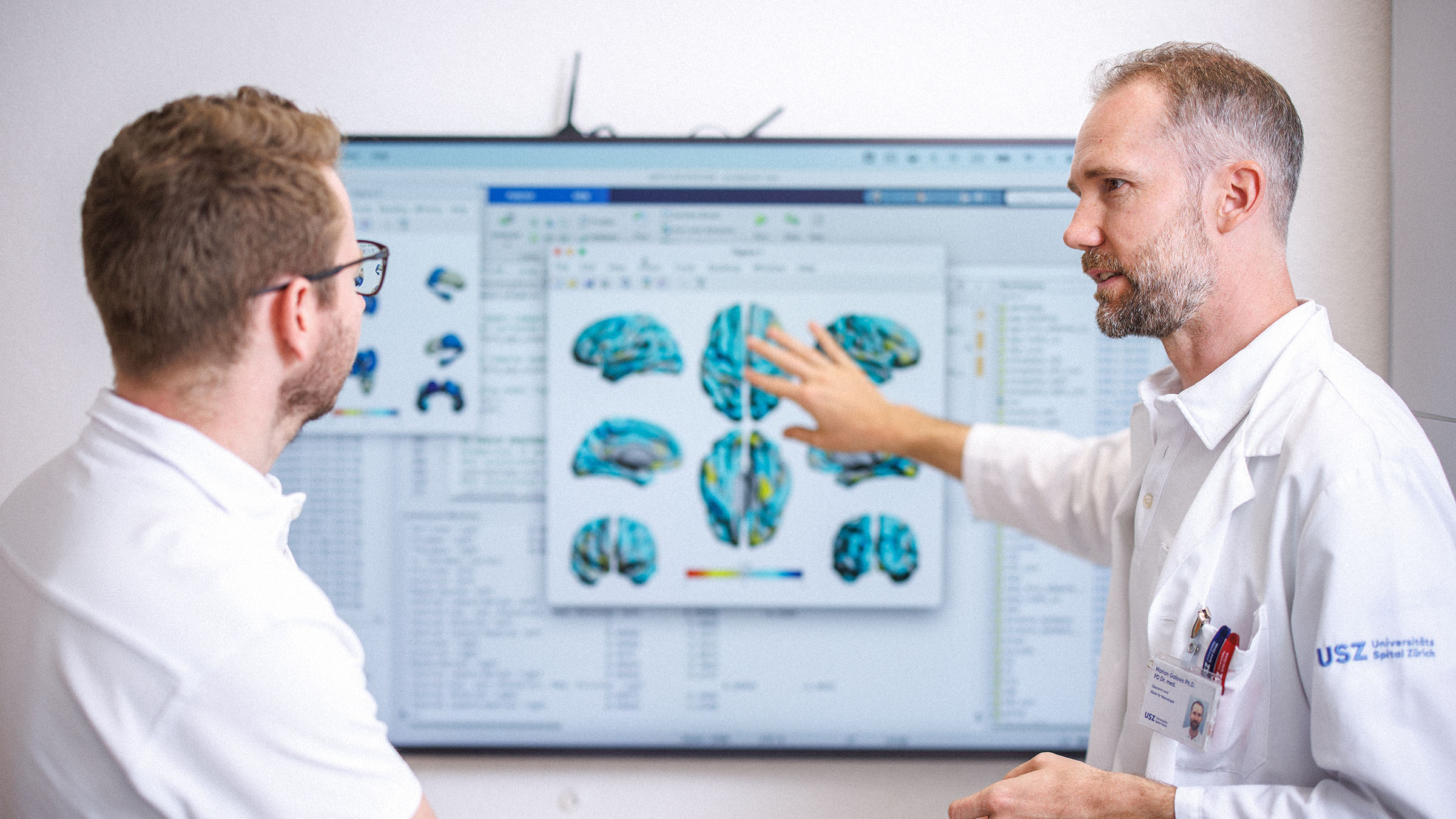
Researchers reviewing post-stroke brain imaging data
The Gap in Current Evidence

Why Existing Research Falls Short

1

Retrospective or selectively investigated populations — not consecutive, prospective recruitment

2

Variable seizure definitions and inconsistent classification across centres

3

Inconsistent EEG use and heterogeneous follow-up protocols across studies

4

Incomplete handling of competing mortality, limiting transportability and biomarker clarity

Collectively, these limitations restrict the transportability of existing prediction models and obscure the true incremental value of biomarkers — the precise gaps PRe-SeLECT is designed to close.

Built on a Decade of Research

The SeLECT Consortium

Over the past decade, the SeLECT Consortium has established a stepwise evidence base for individualised prediction of post-stroke epilepsy — progressing from pragmatic clinical risk stratification to EEG-augmented biomarker prediction and real-world clinical translation.

2018
SeLECT
Lancet Neurology

Original clinical prediction model for late seizures after ischaemic stroke

2023
SeLECT 2.0
JAMA Neurology

Markedly elevated mortality and epilepsy risk after acute symptomatic status epilepticus

2025
SeLECT-ASyS
Stroke

Acute symptomatic seizure phenotype extension; risk-stratified counselling

2025
SeLECT-EEG
Annals of Neurology

EEG biomarkers improve prediction beyond clinical scores in patients without acute seizures

2026
PRe-SeLECT
In progress

Prospective, harmonised, biomarker-informed validation and prevention platform

Clinical Translation

From Research to Bedside

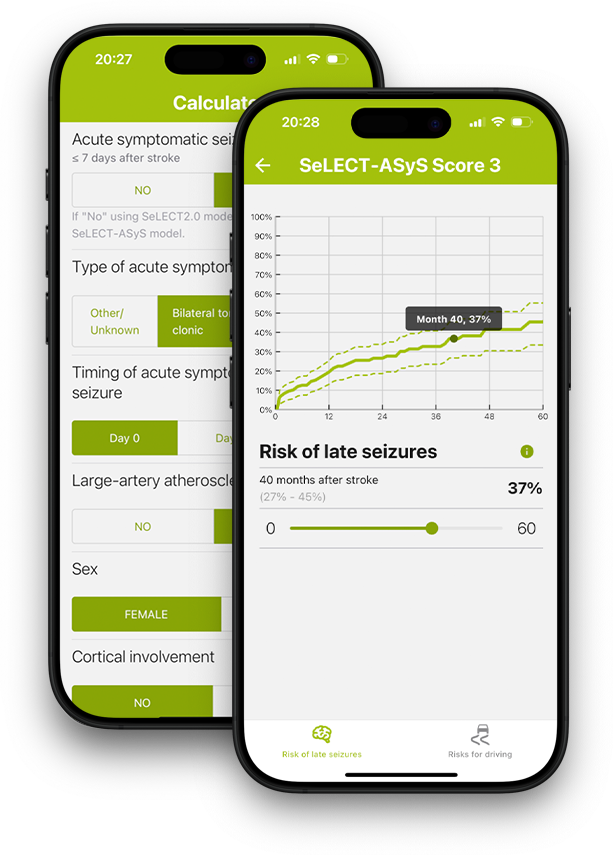
Translation has gone beyond publications. SeLECT-family tools are available as web- and app-based calculators actively used in clinical practice for individualised risk counselling on driving, return to work, and seizure prognosis.

  • Bedside seizure risk estimation within minutes of stroke admission
  • Counselling on driving restrictions and return-to-work decisions
  • Available as web calculator and iOS/Android app
  • Validated across multiple international cohorts
Open Calculator
SeLECT score calculator iOS app showing seizure risk at 40 months
SeLECT Consortium

Visit the SeLECT Consortium Website

Full details on the consortium's research programme, member institutions, open-access tools, and publications are available at select-consortium.com

select‑consortium.com
The Study

PRe-SeLECT — A Prospective
Reference Platform

PRe-SeLECT is not another retrospective validation cohort. It is a prospective reference platform designed to make post-stroke seizure prediction clinically usable, transportable, biologically informed, and trial-ready.

Consecutive Prospective Recruitment

Screening-log verified consecutive enrolment across all sites — eliminating selection bias that undermines existing retrospective evidence.

Harmonised Outcome Ascertainment

Standardised two-stage seizure screening, ILAE-aligned classification, and reconciled follow-up protocols across 20+ international centres.

Competing-Risk Analysis

Death after stroke is explicitly modelled as a competing outcome, providing more credible and transportable seizure risk estimates across health systems.

Modular Biomarker Enrichment

A pre-specified enriched subcohort (SeLECT 2.0 ≥4 / CAVE ≥2 / acute seizure) enables deep phenotyping with EEG, MRI, and blood biomarkers.

Scientific Objectives

Five Integrated Research Outputs

O1

External Validation

Prospective external validation of the SeLECT and CAVE prediction models in a consecutive international cohort with competing-risk methodology and TRIPOD-compliant reporting.

O2

Recalibration & Updating

Recalibration and dynamic updating of prediction models across populations and health systems using internal-external cross-validation and meta-analytic summaries.

O3

Biomarker Incremental Value

Quantifying the added predictive value of EEG, neuroimaging, and blood biomarkers beyond clinical risk scores in the enriched subcohort.

O4

Parsimonious Bedside Model

Deriving a lean, practical bedside prediction tool validated for lower-resource settings — reducing barriers to implementation in diverse health systems globally.

O5

Competing-Risk Epidemiology & Patient Outcomes

Characterising the competing-risk landscape of post-stroke seizures versus death, and embedding patient-reported outcomes (PROMs) to capture the lived impact on quality of life, driving, and return to work.

Enriched Subcohort

Three Biomarker Domains

A pre-specified enriched subcohort undergoes deep phenotyping across three complementary biomarker domains to test incremental predictive value beyond clinical scores.

EEG Biomarkers

  • Epileptiform discharges and spike-wave complexes
  • Rhythmic and periodic EEG patterns
  • Electrographic seizures ≤72 h post-stroke
  • Background abnormalities and regional slowing

Neuroimaging Biomarkers

  • Lesion location and cortical involvement
  • Voxel-based lesion–symptom mapping
  • Blood product burden and distribution (ICH)
  • Imaging predictors post-thrombectomy

Blood-Based Biomarkers

  • Neuronal injury markers (NfL, GFAP)
  • Neuroinflammation biomarkers
  • Biosampling governed by cross-site SOPs
  • Incremental value analysis vs. clinical predictors
Study Design

Rigorous by Design,
Scalable by Structure

International consecutive enrolment combined with remote-first standardised follow-up and harmonised competing-risk analysis — built for transportability from day one.

Day 0
Stroke Onset

Acute ischaemic stroke or primary intracerebral haemorrhage — the time-anchored index event

≤48 hours
Admission

Neuroimaging confirmed; symptom onset or last-known-well recorded

≤7 days
Enrolment

Consecutive enrolment with screening-log verification and reconciliation

3 months ±1
First Follow-up

Remote-first; standardised two-stage seizure screening instrument

12 months ±1
Second Follow-up

Seizure reclassification; triggered confirmatory pathway for detected events

24 months ±1
Primary Endpoint

First unprovoked seizure >7 days post-stroke; competing risk with death

Eligibility

Who Participates

  • Adults ≥18 years with first-ever, neuroimaging-confirmed acute ischaemic stroke or primary intracerebral haemorrhage
  • Admitted within 48 hours of symptom onset or last-known-well time
  • Enrolled within 7 days of admission; consecutive enrolment with screening-log reconciliation at each site
Enriched Subcohort (any one criterion)
SeLECT 2.0 ≥4 CAVE ≥2 Acute symptomatic seizure

High-risk patients undergo deep phenotyping with EEG, MRI, blood biomarkers, and PROMs.

Cohort Structure

Two-Tier Design

Full Consecutive Cohort

N ≈ 5,000
Ischaemic stroke Primary ICH First-ever event All sites

Enriched Subcohort

High-risk stratum
SeLECT 2.0 ≥4 CAVE ≥2 Acute symptomatic seizure
EEG MRI Blood PROMs
5,000 Target participants consecutive enrolment
~200 Expected primary events seizures at 24 months
3 Follow-up assessments at 3, 12 & 24 months
IECV Validation strategy internal-external cross-validation

Working Groups & Team

PRe-SeLECT integrates leading expertise across four thematic working groups, each co-led by internationally recognised specialists from the SeLECT Consortium.

KS
Co-Principal Investigator

Dr. Kai Michael Schubert, PhD

University Hospital Zurich, Switzerland

Leads proposal development, study integration, cohort design, seizure-outcome framework, and translational prediction strategy.

MG
Co-Principal Investigator

PD Dr. Marian Galovic, PhD

University Hospital Zurich, Switzerland

Head of Epilepsy Department at USZ; Management Group, EAN Scientific Panel on Epilepsy; developer of SeLECT score. Senior scientific leadership, consortium credibility, and strategic oversight.

ET
Steering Committee

Prof. Eugen Trinka, MD

Paracelsus Medical University, Salzburg, Austria

Director ECET; PI of antiepileptogenesis RCTs; Chair ILAE Task Force on Acute Symptomatic Seizures. Supports trial design, conduct, and dissemination through ILAE.

MK
Steering Committee

Prof. Matthias Koepp, MD

UCL Queen Square / Epilepsy Society MRI Unit, UK

ILAE Neuroimaging Task Force; Clinical Lead, Epilepsy Society MRI Unit; extensive fMRI/PET expertise. Standardises MRI acquisition, central QC, and imaging-derived biomarker pipelines.

EEG Working Group

Minimum acquisition standards, QC workflows, acute EEG ≤72 h feasibility, and EEG-derived biomarker pipelines for the enriched subcohort.

Co-Leads
SB

Prof. Sándor Beniczky

Rigshospitalet / Danish Epilepsy Centre 🇩🇰
EEG standardisation; Vice-chair ILAE Publication Council; Editor-in-Chief Epileptic Disorders
NG

Prof. Nicolas Gaspard

Hôpital Erasme (HUB) / ULB 🇧🇪
Acute EEG strategy; ILAE Status Epilepticus Task Force; ICU EEG terminology
CB

Dr. Carla Bentes

Hospital de Santa Maria / Univ. Lisbon 🇵🇹
EEG biomarkers after stroke; core SeLECT-EEG evidence base

Imaging Working Group

MRI acquisition/transfer standards, central QC, lesion-mapping methods, and imaging-derived biomarker pipelines for the enriched subcohort.

Co-Leads
MG

PD Dr. Marian Galovic, PhD

University Hospital Zurich 🇨🇭
Imaging-linked post-stroke epilepsy prediction; translational model development
JG

Dr. Joachim Gruber, FEBN

Kepler Univ. Hospital / JKU Linz 🇦🇹
Stroke imaging phenotyping; voxel-based lesion–symptom mapping; post-thrombectomy predictors

Biomarkers Working Group

Biosampling SOP governance, blood/CSF biomarker strategy, incremental-value analyses, and EEG-derived quantitative biomarker definitions.

Co-Leads
SM

Prof. Stefano Meletti

Univ. Modena & Reggio Emilia / AOU Modena 🇮🇹
Biomarker studies after brain insults; lead author on SeLECT₂.₀; biosampling governance
LA

Dr. Laura Abraira

Vall d'Hebron / UAB, Barcelona 🇪🇸
Acute-phase blood biomarkers predictive of epilepsy; clinical translation
AF

Dr. Ana Franco

Hospital de Santa Maria / Univ. Lisbon 🇵🇹
EEG-derived quantitative biomarkers; analytic feature definitions; enriched phenotyping

PROMs / Outcomes Working Group

PROM selection and implementation, multilingual feasibility, remote follow-up practicality, and endpoint-definition alignment across sites.

Co-Leads
EF

Dr. Emma Foster

Monash University, Melbourne 🇦🇺
PROM selection; multilingual feasibility; lead author SERIAS PROM programme
FB

Prof. Francesco Brigo

South Tyrol Healthcare Agency 🇮🇹
Endpoint-definition alignment; remote follow-up practicality; telemedicine leadership

20 Sites. 18 Countries.

PRe-SeLECT is built on the international SeLECT Consortium — a decade of collaboration now spanning five continents to deliver a truly diverse, transportable platform for post-stroke epilepsy research.

20
Sites
18
Countries
5
Continents
🇨🇭 Switzerland
  • University Hospital Zurich Galovic / Wegener & Globas
  • University Hospital Basel Hardmeier / Fladt
🇦🇹 Austria
  • Christian Doppler Univ. Hospital, Salzburg Trinka / Kapeller & Ganser
  • Kepler Universitätsklinikum, Linz Helbok / Dormann
  • Universitätsklinik, Innsbruck Delazer & Astner-Rohracher / Knoflach
🇩🇪 Germany
  • Charité – Universitätsmedizin, Berlin Doerrfuss / Holtkamp
🇧🇪 Belgium  ·  🇳🇱 Netherlands
  • HUB-Erasme, Brussels Gaspard / Naeije
  • Maastricht UMC Rouhl
🇵🇹 Portugal
  • Hospital de Santa Maria, Lisbon Bentes / Pinho e Melo
🇪🇸 Spain
  • Vall d'Hebron Univ. Hospital, Barcelona Abraira / Olivé
🇮🇹 Italy
  • AOU Modena Meletti
  • Udine Univ. Hospital Valente / Merlino
  • South Tyrol Healthcare Agency Brigo
🇬🇷 Greece
  • AHEPA Univ. Hospital, Thessaloniki Kimiskidis / Poulidou
  • NKUA, Athens Tsalouchidou / Tsivgoulis
🇱🇹 Lithuania  ·  🇨🇿 Czech Rep.
  • Hospital of Lithuanian UHS, Kaunas Gelziniene / Jurkeviciene
  • Brno Epilepsy Center Dolezalova / Weiss & Stefela
🇩🇰 Denmark  ·  🇭🇺 Hungary
  • Rigshospitalet / Danish Epilepsy Centre Beniczky
  • Semmelweis University, Budapest Kelemen / Nardai
🇯🇵 Japan  ·  🇲🇾 Malaysia
  • National Cerebral & Cardiovascular Center, Osaka Fukuma / Ihara
  • Universiti Kebangsaan Malaysia Khoo / Tan
🇦🇺 Australia  ·  🇧🇷 Brazil  ·  🇦🇷 Argentina
  • Monash University, Melbourne Foster
  • Hospital Municipal São José, Joinville Braatz / Longo
  • Clínica La Sagrada Familia, Buenos Aires Portinari / Rosales

From Prediction to Prevention

PRe-SeLECT is designed from the outset as a trial-ready platform. Accurate risk stratification enables enriched, targeted antiepileptogenesis trials — where candidate preventive therapies already show meaningful effect estimates.

1

Predict

Validate and update SeLECT2.0 prospectively. Quantify the incremental value of EEG, MRI, and blood/CSF biomarkers for accurate individualised risk estimates.

2

Stratify

Identify high-risk patients (SeLECT2.0 ≥4 / CAVE ≥2 / acute symptomatic seizure) who are most likely to benefit from preventive intervention.

3

Prevent

Enable efficient, risk-enriched antiepileptogenesis trials against candidate therapies with existing proof-of-concept data in humans.

Renin–Angiotensin System

Angiotensin Receptor Blockers

23–34% RRR

ARBs modulate neuroinflammation and blood–brain barrier permeability. Retrospective and registry data suggest clinically meaningful reduction in post-stroke epilepsy risk.

HMG-CoA Reductase

Statins

~27% RRR

Pleiotropic anti-inflammatory and neuroprotective effects. Statin use is associated with reduced seizure incidence in large observational datasets after ischaemic stroke.

Incretin / GLP-1 Pathway

GLP-1 Receptor Agonists

~30% RRR

Emerging anti-epileptogenic evidence via neuroinflammation suppression, metabolic neuroprotection, and reduced glial scar formation — a rapidly growing area of translational interest.

The SeLECT Calculator

Already in clinical use across the SeLECT Consortium, the SeLECT risk calculator and app provide bedside prediction of post-stroke seizure risk — the clinical tool that PRe-SeLECT will validate, recalibrate, and biomarker-enhance at scale.

Explore the SeLECT Consortium →
SeLECT risk calculator app

Become Part of the Platform

PRe-SeLECT is actively recruiting additional partner sites. Joining means contributing to the most comprehensive prospective post-stroke epilepsy dataset ever assembled — and being part of the trial-ready consortium that will shape future preventive trials.

Sites contribute to a harmonised minimum dataset with optional deep-phenotyping modules. No complex infrastructure required for core participation.

  • Stroke unit with acute neurology or neurocritical care capability
  • Ability to enrol consecutive patients ≤7 days from admission
  • Capacity for remote-first follow-up at 3, 12, and 24 months
  • Willingness to maintain a prospective screening log
  • Interest in EEG, MRI, or biomarker modules (optional, enriched subcohort)
Express Interest

Get in Touch

Reach out to the coordinating team to discuss site participation, data access, or collaboration opportunities.

select@usz.ch
University Hospital Zurich
University of Zurich
SeLECT Consortium